Helpful advice for sites with tight access, long runs or pours that need faster placement. This guide explains the key points in plain English, with practical advice for projects across Bristol and the surrounding areas.
Use pumping when access is awkward
A pump can move concrete where the mixer cannot get close enough, including rear gardens, long hose routes, narrow access points and sites where barrowing would slow the pour down.
It is also useful when the pour needs to happen quickly or when the working area needs to stay cleaner and easier to manage.
Match the pump to the site
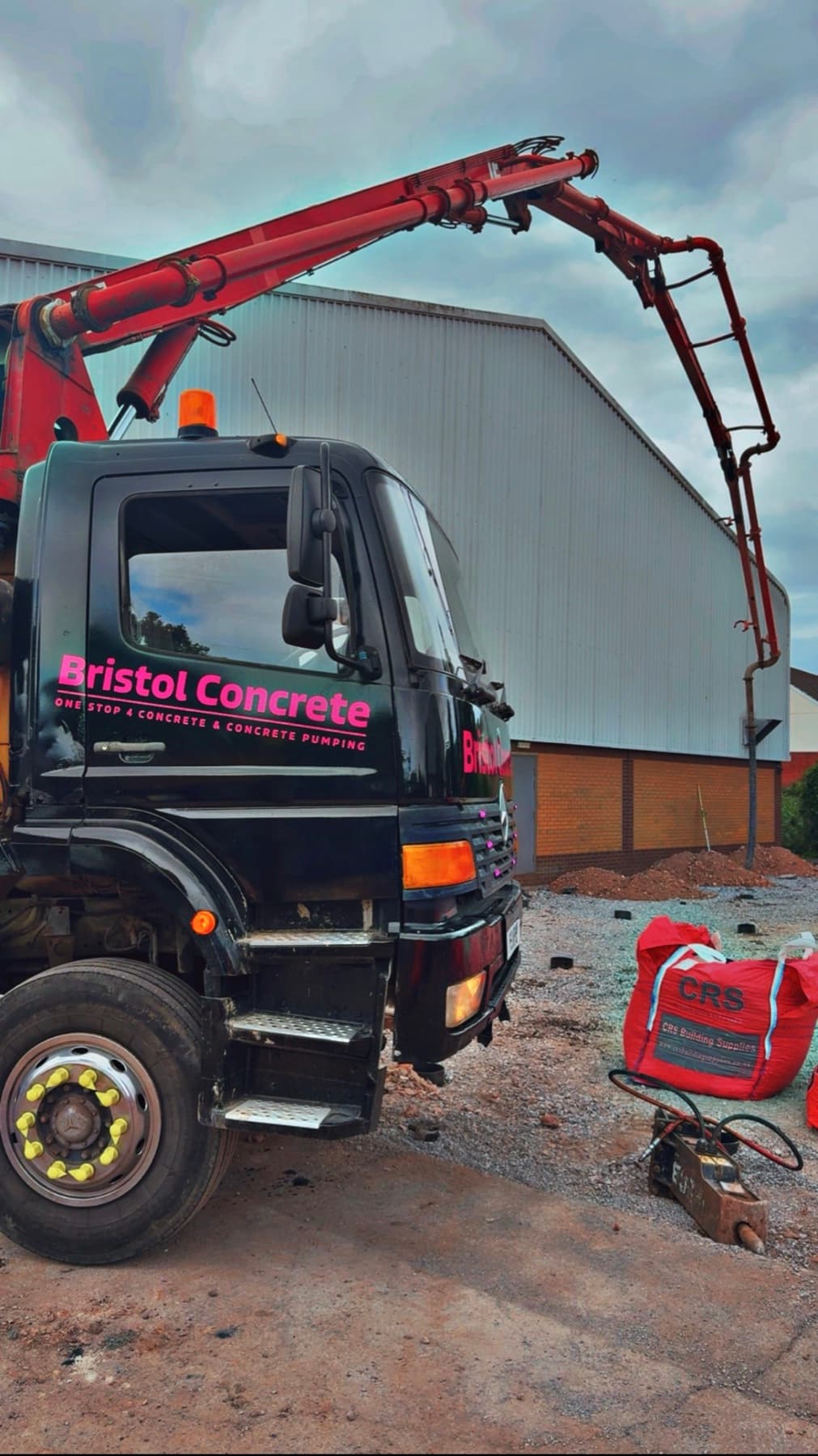
Line pumps are practical for many domestic and restricted-access jobs. Boom pumps can help when concrete needs to reach over obstacles or across a larger working area.
The right choice depends on the distance, access route, available space and how the concrete needs to be placed once it reaches the pour area.
Coordinate concrete and pumping together
When the concrete supply and pump are planned together, timing is easier to manage and the pour can run more smoothly from arrival to placement.
Sharing the volume, postcode, parking details and any restrictions early helps the team plan the delivery and pump setup properly.